What is Japandi, and Is It Right for Your Kitchen?
A calmer, more considered kind of contemporary design – and how to bring it into a real kitchen.
Where Good Design Begins
More Than a Colour Palette
Most style trends start and end with a colour palette. Japandi runs deeper than that, built from two design cultures that reached the same conclusions by different routes.
The name comes from Japan and Scandinavia, but it's really a shared set of values: respect for natural materials, and a quiet confidence that a room doesn't need much to feel right.
The Idea Behind the Look
Where the Style Comes From
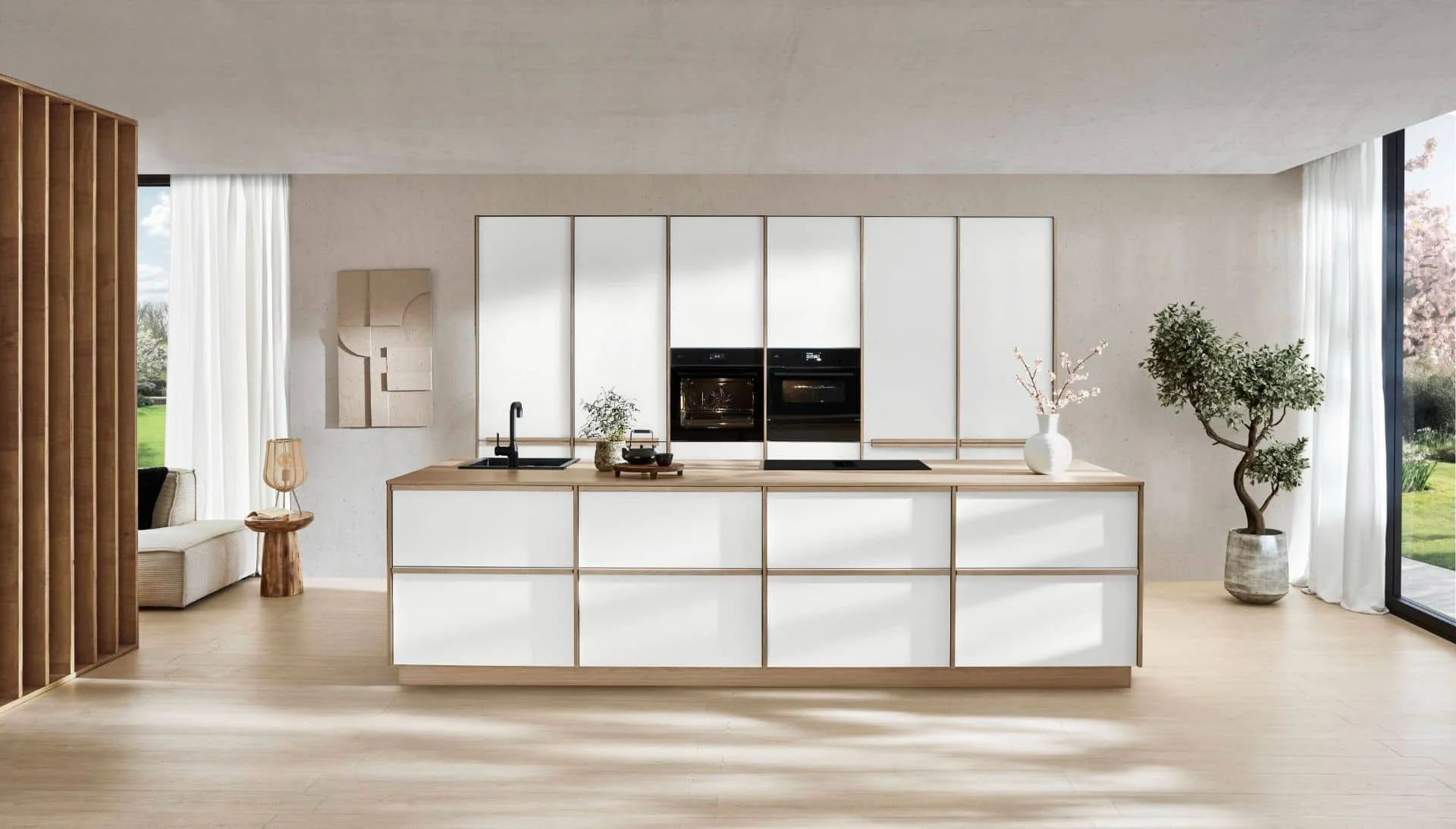
Japanese design brings wabi-sabi, an appreciation for natural imperfection, and ma, the deliberate use of empty space. A grain running through a wood front, a worksurface with real texture, a run of cabinetry with room to breathe around it: these read as considered, not unfinished.
Scandinavian design brings the practical warmth of hygge, comfort that comes from how a room is used rather than how it photographs. Layered lighting and natural textures do more of the work than statement furniture.
Put the two together, and Japandi asks a simple question of everything in the room: does this earn its place? The result is calm without being sparse, and warm without being cluttered.
Is It Right for Your Home?
A Style With Real Range
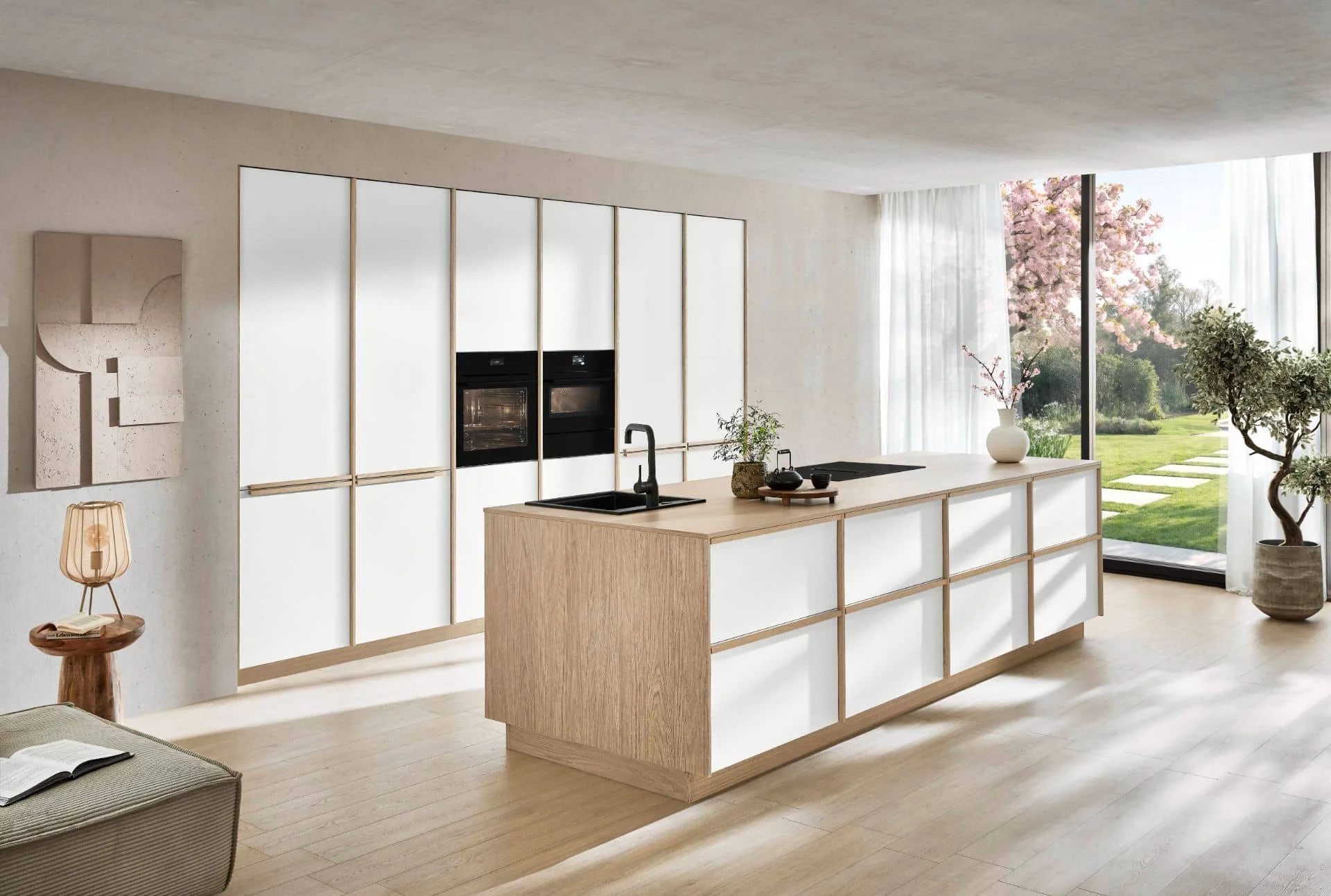
Japandi suits open-plan extensions particularly well. Handleless doors and a restrained palette sit comfortably in a newer, light-filled space, and natural materials give a large room warmth.
It also works better than most contemporary styles in older or period properties, where warm wood tones and a soft colour palette sit comfortably alongside original features.
Where the household wants bold colour or a kitchen that makes a real statement, a more graphic modern style or a classic painted kitchen usually suits the brief better. Japandi is deliberately quiet, and that restraint is the point rather than a limitation.
The Details That Make it Work
What a Japandi Kitchen Actually Looks Like
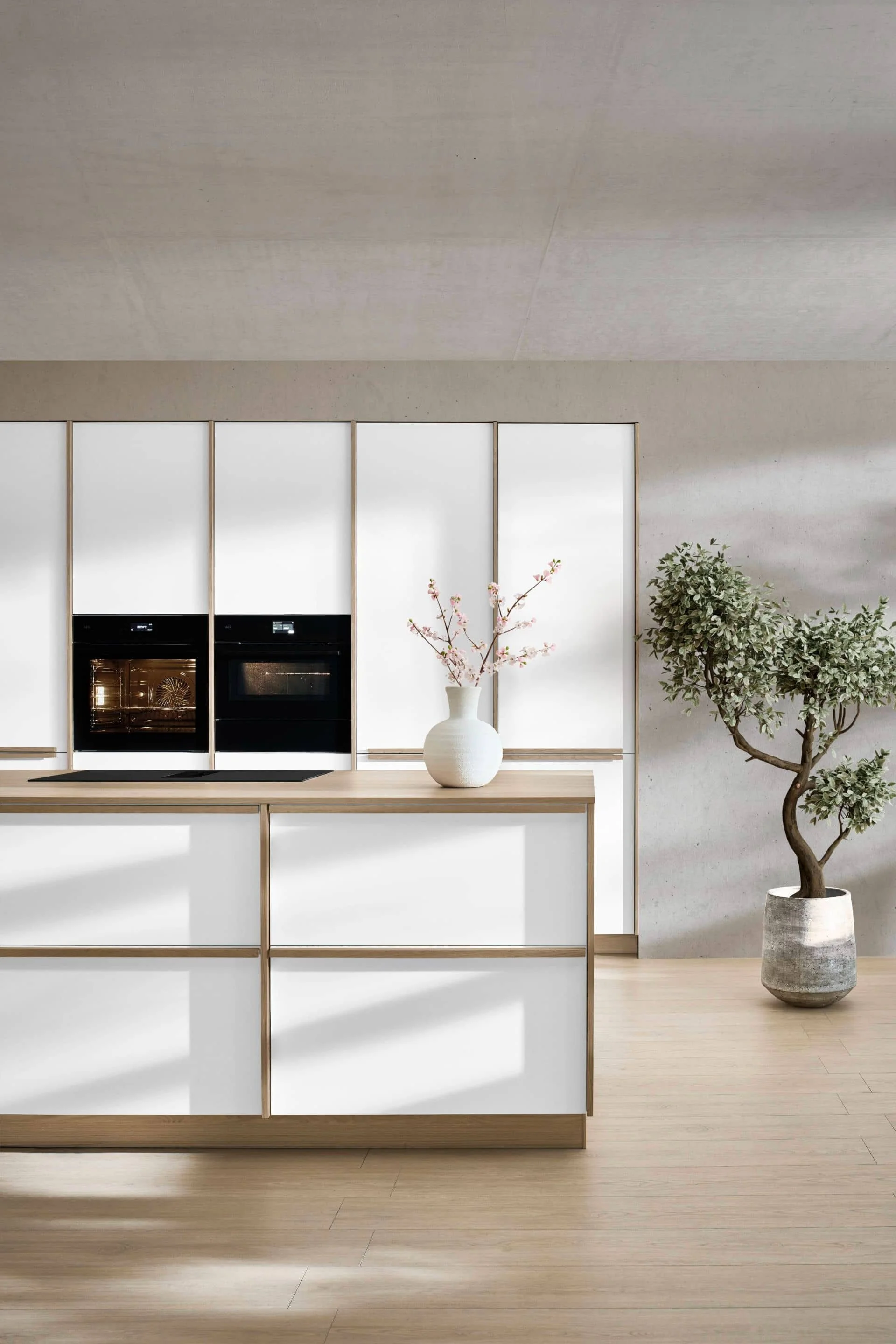
Matte, handleless doors set the tone, usually in a warm off-white or soft sage. Wood tones do a lot of the work: a light oak or ash for warmth, or something darker where the room can carry more weight – the moodier, deeper-toned “Dark Japandi” look is one of the style's more interesting developments this year. Worksurfaces stay low-reflection: honed stone or a matt quartz reads calmer than anything glossy.
Storage matters more than in most contemporary kitchens, because the style depends on clear surfaces. A pocket door tall unit or a hidden breakfast station keeps the everyday clutter out of sight, with the storage still close at hand. Lighting stays warm and layered, built from several soft sources around the room.
How to Specify It
Nobilia's Take on Japandi: The Sakura Design Line
Nobilia's Sakura design line was built specifically around the Japandi look, and it's a useful reference for how the style translates into a real specification rather than a mood board.
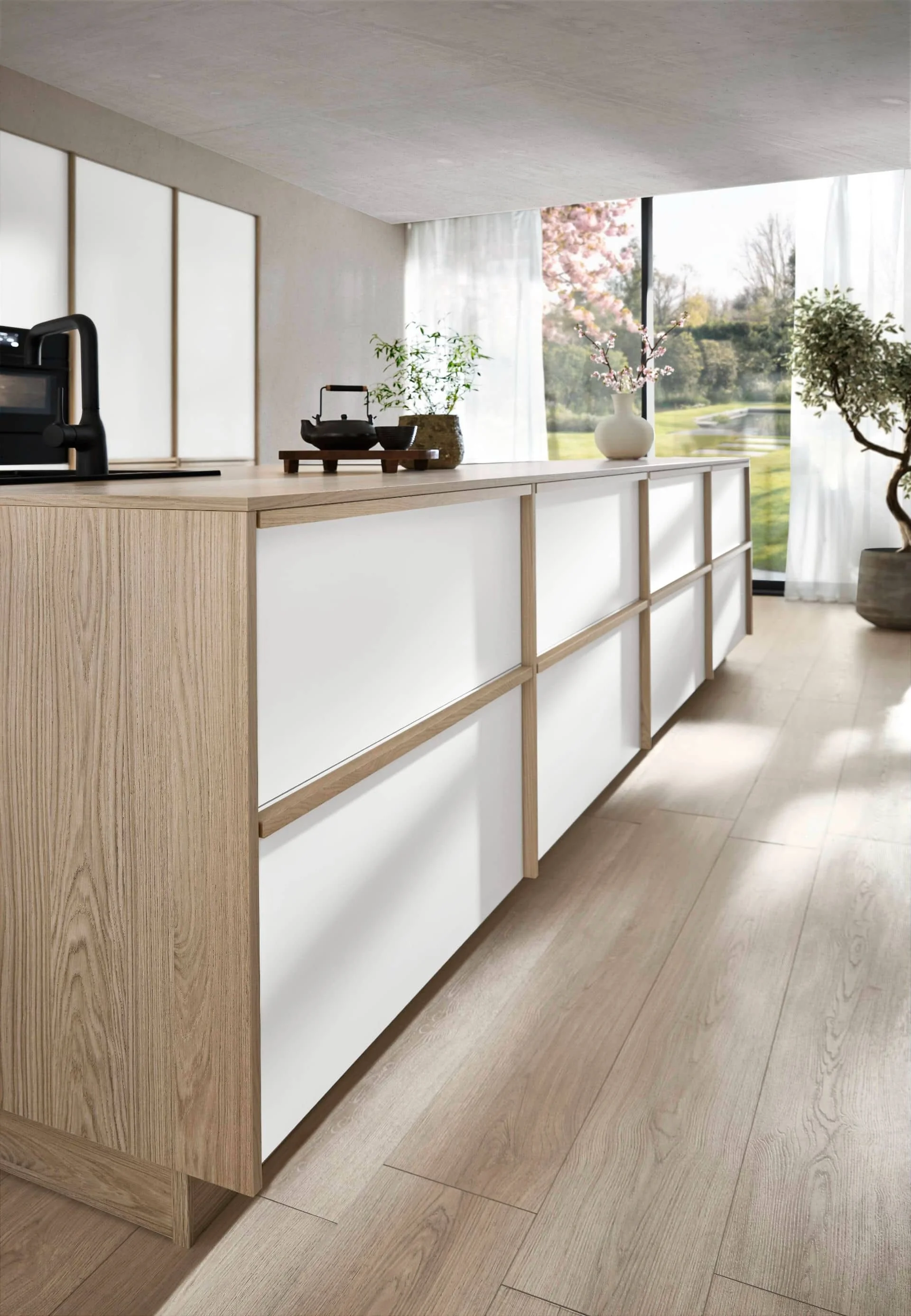
The starting point is SENSO 488, a matte, anti-fingerprint white front that gives the kitchen its calm base. Around it sits a 16mm frame in a wood-effect finish, with extra-deep side panels and cover shelves that give the cabinetry a fine, handcrafted structure. Door furniture comes as a slim screw-on bar in Como oak, simple enough to disappear into the overall design. Worksurfaces follow the same principle: Nobilia's Slim Line range at 16mm thick, chosen to keep the whole run looking light.
What makes Sakura worth knowing well is that it's built to adapt. The wood-effect frame pairs with any smooth front colour in the range, so the look can lean paler and neutral, or take on some of the warmer sage and taupe tones coming through in 2026, with the specification staying the same either way.
We work with Nobilia across all three showrooms, so you can see the Sakura finishes, the frame detail and the worksurface options in person before deciding whether they're right for your kitchen.
Why RFK
The Same Team, From First Idea to Finished Kitchen
A Japandi kitchen depends on getting a lot of small decisions right: the exact tone of a wood finish, how a worksurface edge catches the light, where storage needs to disappear and where it can stay visible. That's the kind of detail a single designer builds a feel for over the course of a project, which is why the same person stays with you from your first conversation through to installation.
It's also why clients come back to us for their next room, and send friends and family our way afterwards. RFK was named Kitchen Retailer of the Year in recognition of that same approach.
Got a question about Japandi kitchens?
-
Yes, often better than a fully handleless contemporary kitchen. The warm wood tones and soft palette sit comfortably alongside original features, rather than competing with them the way a stark white gloss finish can.
-
Not quite. Colour is part of it, but the bigger factor is restraint: fewer, better materials and clear surfaces, with genuine warmth from natural wood and texture. A pale kitchen with lots of visible clutter isn't Japandi, and a slightly darker kitchen with the same discipline around materials and storage often reads more true to the style.
-
Yes. A soft, in-frame door in a wood tone or muted colour can carry a lot of the same warmth and restraint as a full Japandi specification, without moving into a fully contemporary layout. It's worth talking through at the design consultation, particularly if your home already leans traditional.
-
Nobilia's Sakura design line is the most direct match, built specifically around the style. Next125 can also achieve a similar look through its wood-effect fronts and worksurfaces, particularly where the room calls for a more architectural specification. We'll talk through which range suits your home at the design consultation.
The best way to know whether Japandi suits your kitchen is to see the materials in person. Our showrooms in Rugby, Warwick and Market Harborough all have Nobilia displays worth a look, including the Sakura finishes.