
Rugby, Warwick & Market Harborough
Kitchen Worksurfaces
Worksurfaces chosen to suit how you use your kitchen.
Where good design begins
The right worksurfaces for your kitchen.
A kitchen worksurface has to do a lot. It needs to suit the style of the kitchen, cope with daily use, work with the sink and hob, and feel right in the room as a whole. It’s probably the most visible finishing choices in the kitchen, so its worth spending some time on to get right.
We help you choose kitchen worksurfaces across Rugby, Warwick, Market Harborough and the surrounding areas, looking at material, colour, thickness, edge detail, maintenance, budget and how the worksurface will pair with the cabinetry, appliances, sink and layout.
choosing the right kitchen worksurface
A practical surface with a big visual role.
There’s no single best worksurface material. The right choice will depend on how you’ll use your kitchen, how much maintenance you’re comfortable with, the style of the cabinetry and the level of investment that feels right for your project.

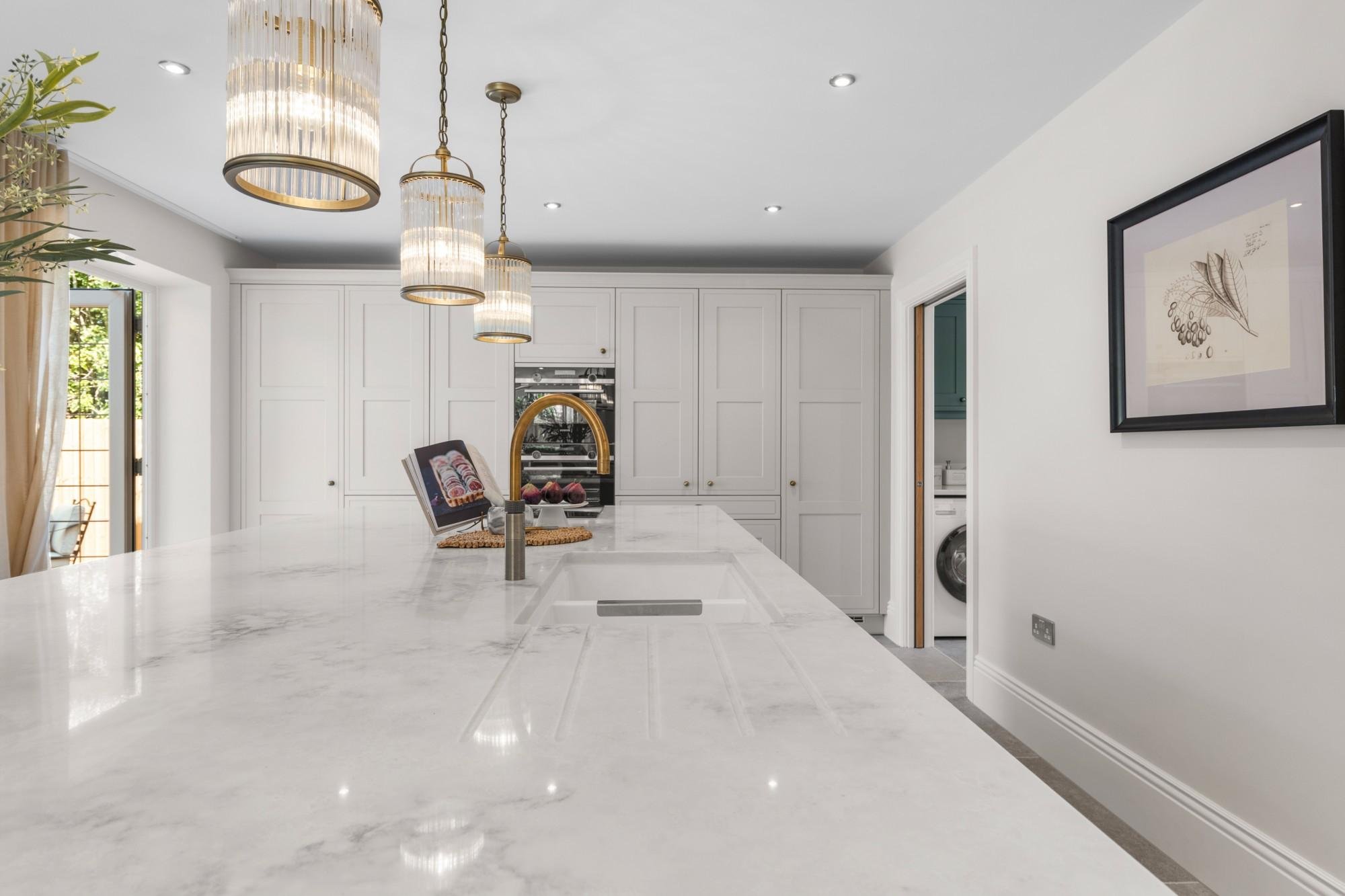
Quartz

Natural stone
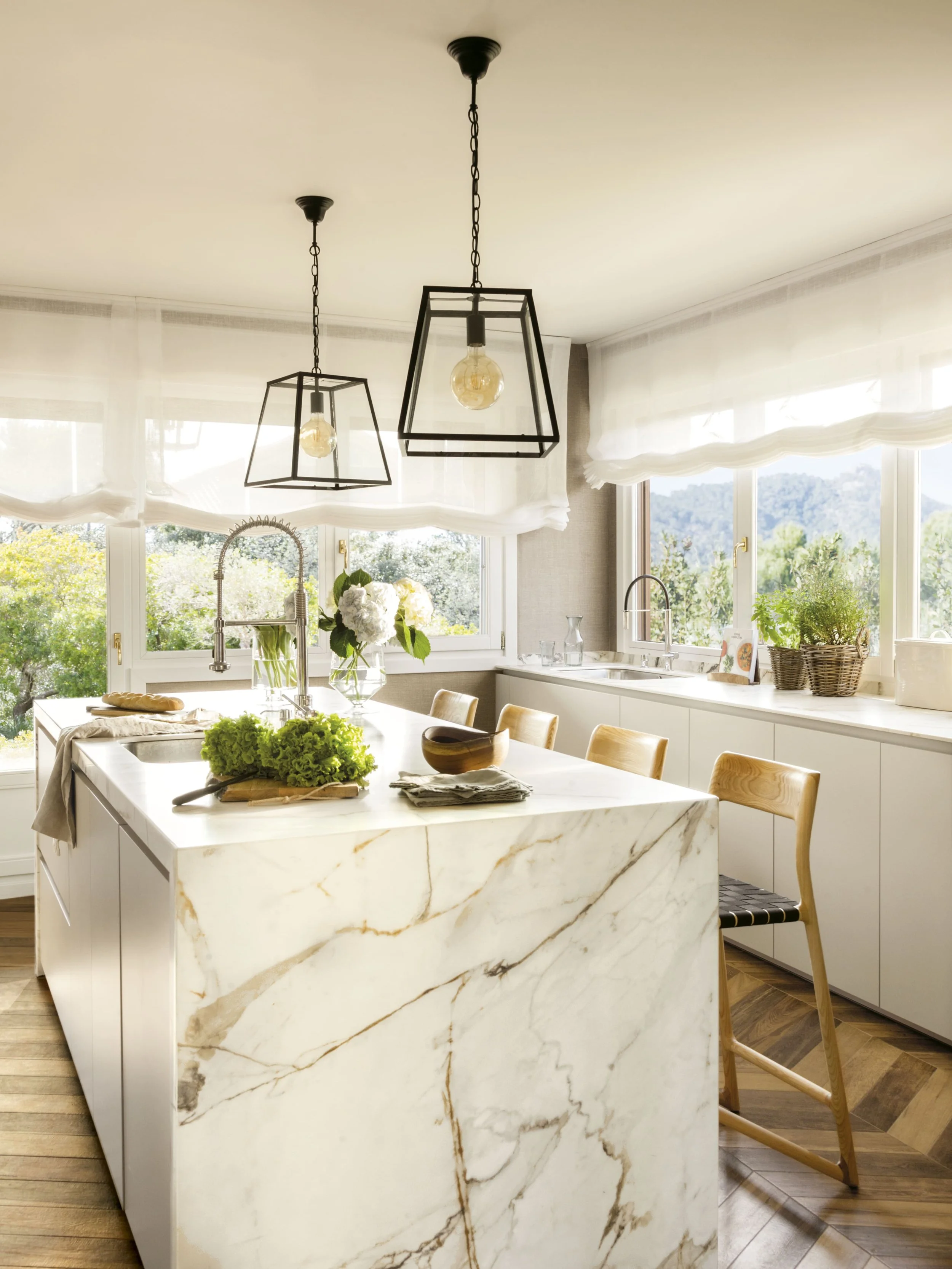
Ceramic and porcelain

Laminate
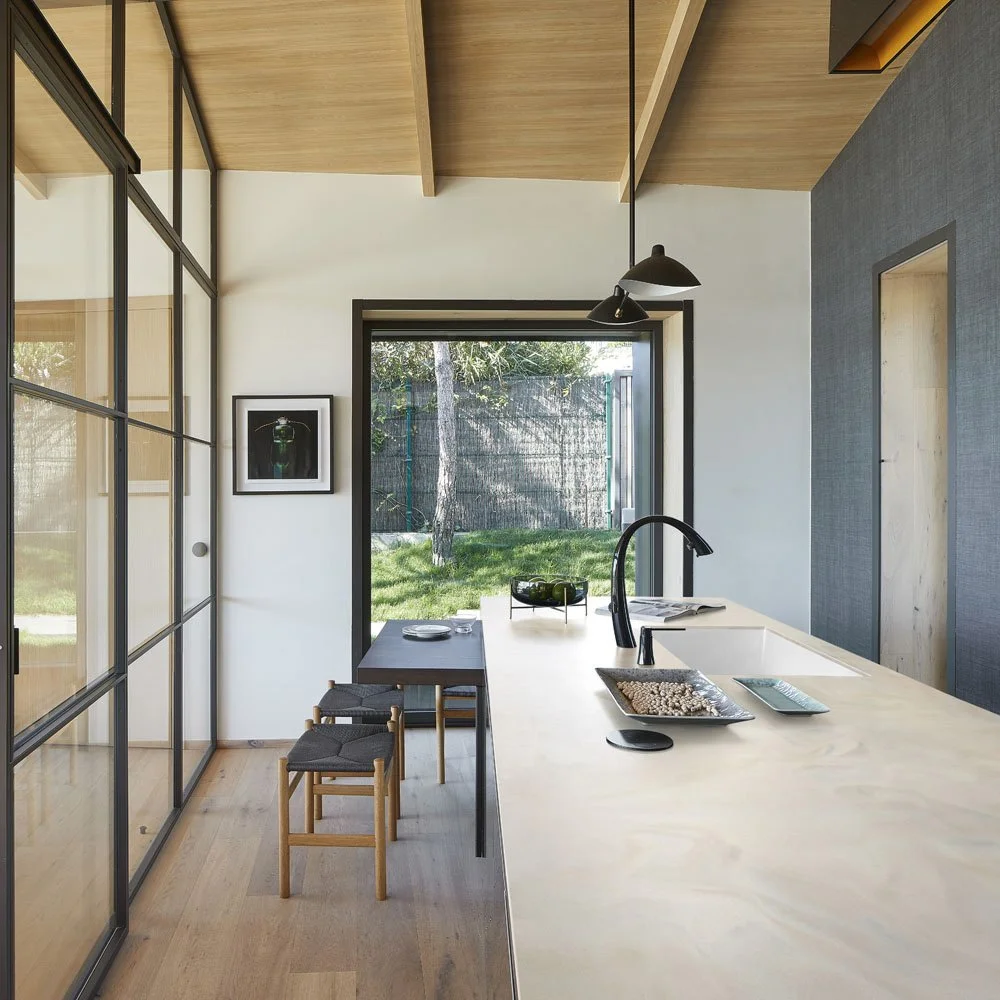
Solid surface

Timber and feature details






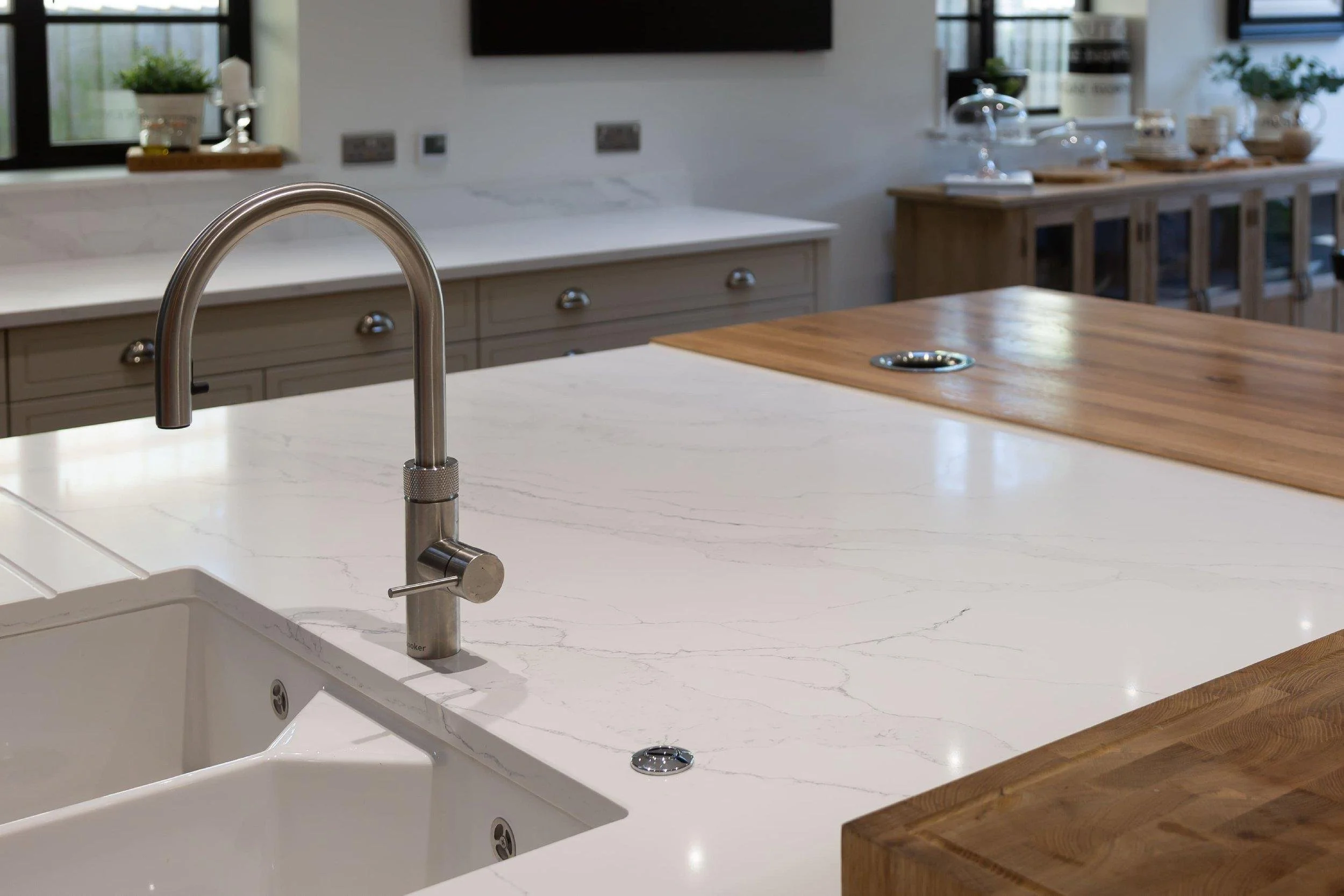
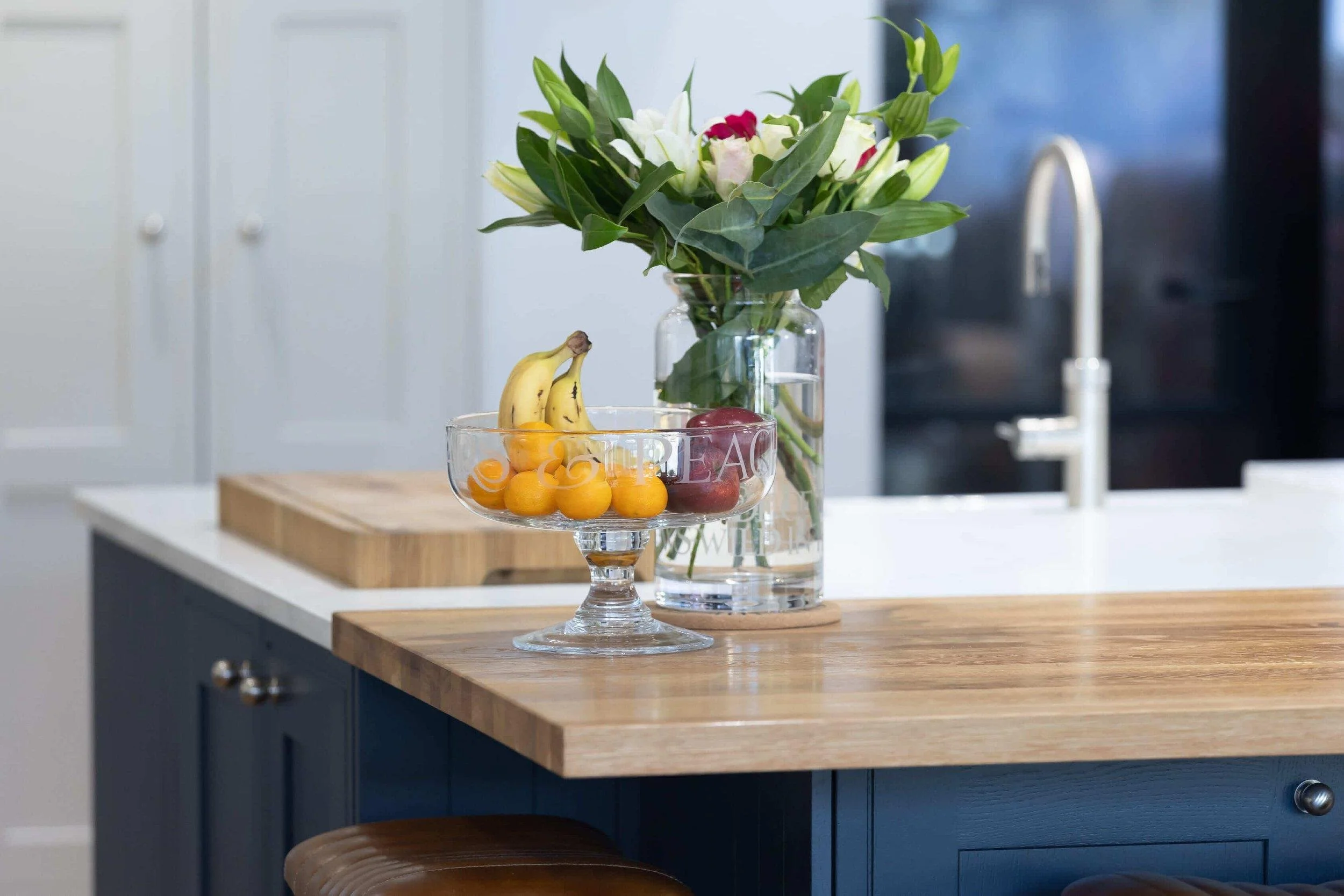
Our projects
Worksurfaces in completed RFK kitchens.
Worksurfaces can be quiet and understated, or they can be a showstopping design feature.
Our project pages show how worksurfaces work across different styles, from classic in-frame kitchens with warm, traditional finishes to modern handleless kitchens with clean, precise surfaces.
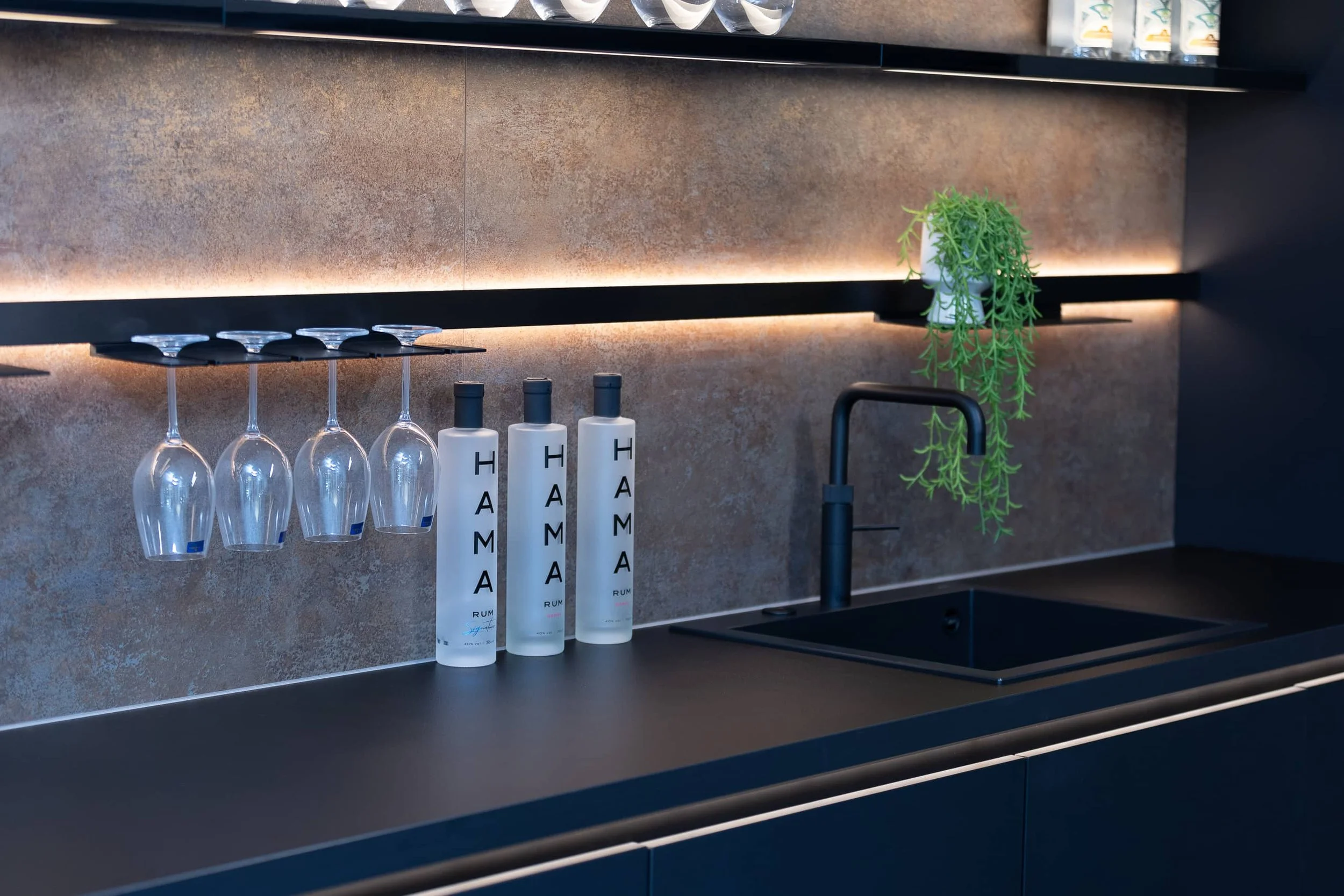
Our approach to worksurfaces
The worksurface can change the whole feel of a kitchen. A pale quartz surface can keep a room feeling light and calm. A darker stone can add depth and drama. A timber detail can soften a scheme. A slim ceramic or compact surface can make a modern kitchen feel sharp and more architectural.
We think about how much surface space the kitchen needs, where joins might be needed and which material might be most suitable for extra-long runs, how the material is likely to work around sink and hob cutouts, and how much maintenance you’re willing to put in (some more porous surfaces, such as wood, need more care than others).
Related Kitchen Elements
Related Appliances & Accessories
Worksurfaces need to be considered alongside the rest of the kitchen. Sinks, taps, appliances, storage solutions, door furniture and flooring all affect how the worksurface looks and connects with the rest of the kitchen.
Ovens, hobs, extractors and more, chosen for how well they integrate with the cabinetry and work in everyday use.
Drawers, pull-outs, larder units and internal fittings planned around how the kitchen is actually used.
Undermount, inset and Belfast sinks alongside boiling-water and filtered taps, considered as part of the wider layout.
Knobs, bars and cup pulls that tie the kitchen together. Often the smallest decisions, but rarely the least important.
The right floor anchors the whole room. Material, tone and finish all considered in relation to the cabinetry and worksurfaces.
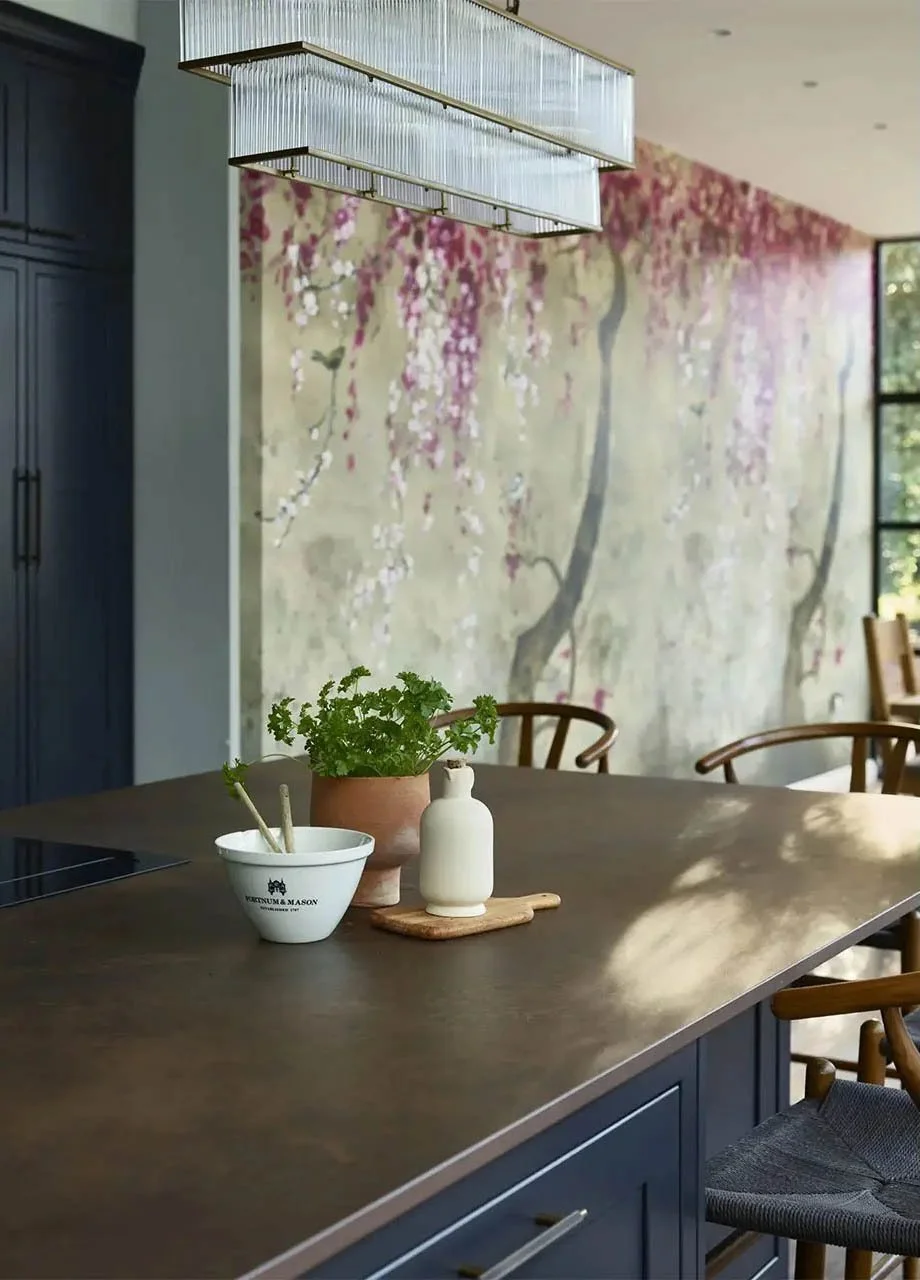
Experience RFK Kitchens
Need help choosing the right worksurface?
The first step is a design consultation with one of our professionals. We’ll talk through how you use your kitchen, the look you are drawn to, and the level of maintenance you’re comfortable with.
From there, we can help you choose a surface that feels right for your home.
Have a question about kitchen worksurfaces?
-
Early in the design process. Worksurface decisions affect the sink, hob, joins, overhangs, edge details and sometimes the cabinetry below.
You don’t need to arrive knowing exactly which material you want, but it helps to talk about the look, budget and how you’ll be using the kitchen from the start.
-
There’s no single best material. Quartz, ceramic, granite, laminate, solid surface and timber all have different strengths.
The right choice depends on the style of kitchen, how important heat resistance is to you, how much maintenance you want to commit to and the investment level that feels right. We’ll help you work through the options in the context of your kitchen.
-
It matters more than most clients expect. The edge profile is the shaped finish on the front edge of the worksurface, and it affects both the look and the cost of the surface.
A square or pencil edge is clean and contemporary. It works well in modern kitchens and is usually the most cost-effective option. A bullnose edge is softer and more rounded, often used in classic or traditional schemes. A bevelled or chamfered edge, or a shark's nose, gives a more contemporary, costlier finish that suits handleless kitchens well. A waterfall edge, where the surface continues vertically down the side of an island, creates a more architectural look and works especially well with true handleless designs.
The profile should be chosen in the context of the cabinetry, the style and the overall design language. We'll talk through the options and show you examples in the showroom.
-
Quartz is engineered, so it has a more consistent appearance and predictable performance. Natural stone is quarried, so every slab has its own pattern, movement and variation.
Natural stone can be beautiful, but it usually needs more thought around sealing, maintenance and how the material will age. If you’re drawn to a marble-effect finish, it’s worth understanding whether you want the genuine material or a quartz alternative. Genuine marble is too soft and porous for most kitchen use. Quartz or porcelain both give a similar look and hold up considerably better day to day, at different price points.
-
Very much so. Ceramic and porcelain worksurfaces, such as Dekton and Laminam, are known for their slim appearance, heat resistance and contemporary feel.
They can be an excellent choice in modern kitchens, but the detailing, fabrication and edge treatment need to be handled carefully. Thinner profiles in particular need the right substrate and a fabricator who's experienced with the material.
-
Laminate is often a good choice in utility rooms, boot rooms and secondary kitchen spaces, where durability and easy maintenance matter more than material richness.
It also works well in rental properties, kitchen refreshes and family kitchens, where hard use and easy cleaning take priority over a premium surface. Finish quality at the better end of the range is much stronger than it was a decade ago.
If the priority is a practical, low-fuss surface at a sensible price, laminate is worth considering. Compact Laminate is a more recent development, offered by a number of brands, and gives a durable, contemporary finish at a lower price point than equivalent solid quartz worksurfaces.
-
A lot. Worksurfaces offer a large visual plane, so colour, thickness, pattern and edge detail all matter.
A pale surface can lift the room. A darker surface can ground it. A strong vein or pattern can become a feature. A quieter finish can let the cabinetry lead. These decisions are worth taking time over.
-
Not always. Some kitchens work best with one worksurface material throughout. Others benefit from a different island surface, especially where the island is intended to feel more like a furniture piece or social zone.
A contrasting timber or stone surface on an island can add warmth and character in a way that a matched surface does not. We’ll look at the whole room before recommending whether to match or contrast.
-
Joins are sometimes unavoidable, especially in larger kitchens, where long runs and large islands require a lot of worksurface. The aim is to position them as discreetly as possible.
The material, slab size, layout and sink or hob position can all affect where joins need to go, so this should be considered during the design process. Some materials show joins more than others, and the skill of the fabricator and installers makes a meaningful difference to the finished result.
-
For natural stone especially, yes. Natural stone slabs vary significantly, even in the same material, so seeing the specific slab is very different from looking at a small sample.
For quartz and ceramic, samples give a reasonable impression, although larger pieces always read differently from small ones. We can advise on what to look at and where, and we’re happy to talk through material options in the showroom with larger sample references where we have them.
Browse our ranges
Not ready to arrange a consultation yet?
Our brochure brings together our full kitchen offer, including styles, supplier ranges and finishing choices. It is a useful starting point while your ideas are still taking shape.
